Contents:
- The Visual Signs of Hair Breakage
- Short Fragments on Clothing and Pillowcases
- Frizz and Flyaways
- Uneven Hair Texture
- Loss of Length Without Cutting
- Breakage vs. Shedding: The Critical Difference
- Hair Shedding
- Hair Breakage
- Where Breakage Occurs Most Frequently
- Ends and Lengths
- Areas Around the Nape and Temples
- Densest Areas if You Have Thick Hair
- The Seasonal Timeline of Breakage
- Budget-Friendly Prevention and Repair Strategies
- Sustainable Hair Care Approach
- Heat Damage Prevention
- Moisture Restoration
- Mechanical Stress Reduction
- What Breakage Looks Like Under Magnification
- Frequently Asked Questions
- Is hair breakage permanent?
- How do you stop hair from breaking?
- Is breakage the same as split ends?
- Can you repair broken hair?
- Why does my hair keep breaking even though I take care of it?
Your hair looks shorter, feels wiry, and you’re not getting the length you’ve been growing for months. Hair breakage is silently sabotaging your progress. Yet many people mistake breakage for normal shedding, ignoring the actual problem. Understanding what does hair breakage look like—and how it differs from shedding—is the first step to fixing it.
Hair breakage appears as short, fragmented pieces throughout your hair shaft, often with a blunt, uneven edge and a slightly fuzzy texture. It’s distinct from hair loss because the strand breaks mid-shaft rather than detaching from the root. Recognising these signs early allows you to address the underlying cause before significant damage accumulates.
The Visual Signs of Hair Breakage
Short Fragments on Clothing and Pillowcases
The most obvious sign is finding short 1–4cm pieces of hair on your pillow, clothes, and bathroom floor. These fragments are significantly shorter than your actual hair length and have blunt, uneven ends. In contrast, shed hair falls out as complete strands with a white bulb (root) still attached. Breakage produces only the middle section of the strand.
Count fragments for a week. Finding 10–20 short pieces daily suggests normal breakage; finding 50+ indicates significant damage requiring intervention.
Frizz and Flyaways
Broken hair fragments stick out at odd angles, creating persistent frizz even after smoothing. These flyaways feel coarse and wiry, different from fine baby hairs at your hairline. Frizz typically increases during humid months (May–September in the UK) when breakage accelerates due to moisture penetration causing strand swelling.
Uneven Hair Texture
Run your fingers down individual hair strands. Healthy hair feels smooth; broken hair feels bumpy, with rough spots where breaks have begun. Some strands may have visible knots or tangles that don’t brush out easily. These are areas of structural damage where the cuticle (outer layer) is severely compromised.
Loss of Length Without Cutting
Your hair mysteriously becomes shorter without trimming. You measure it at 40cm, and months later it’s 35cm despite never cutting it. This length loss is breakage, not growth slowing. Healthy hair growing 6mm monthly should be visibly longer after 3–4 months, not shorter.
Breakage vs. Shedding: The Critical Difference
Hair Shedding
Shedding is the natural hair growth cycle. The bulb (root) remains attached as the entire strand detaches. You’ll see a small white or clear bulb at the root end. Shedding is normal—most people shed 50–100 hairs daily. It’s not a problem unless it’s excessive (200+ hairs daily for 2+ weeks, which suggests medical issues requiring professional assessment).
Hair Breakage
Breakage severs the hair strand mid-shaft. No bulb is present; just a blunt, often frayed edge. Breakage is always caused by external damage (heat, chemicals, mechanical stress), not natural growth cycles. It’s preventable and fixable with proper technique.
Visual test: Look at 10–15 fallen hairs. If most have white bulbs, you’re shedding normally. If most are short pieces with blunt ends, you have breakage.
Where Breakage Occurs Most Frequently
Ends and Lengths
Hair ends are oldest and most fragile. They’ve endured years of heat, weather, and manipulation, making them prone to breakage. The last 5–8cm of hair is 30–50% more vulnerable to breakage than hair closer to the scalp. This is why regular trims (every 6–8 weeks) are cost-effective prevention—removing damaged ends before they break further.
Areas Around the Nape and Temples
These areas experience constant friction (from clothing, necklaces, earrings, rubbing against shoulders). The repeated movement causes the cuticle to lift and crack, leading to breakage. People who sleep in the same position also experience breakage on one side of their head due to pillow friction.
Densest Areas if You Have Thick Hair
Thicker hair experiences more internal friction as strands rub together. Without adequate moisture and slip (from conditioning products), this causes breakage concentrated throughout the mid-lengths rather than just at ends.
The Seasonal Timeline of Breakage
Breakage varies by season in the UK:
- Summer (June–August): Heat styling, chlorine exposure, and UV rays accelerate breakage. Peak season for damage.
- Spring (March–May): Increased humidity causes hair swelling, weakening the cuticle. Breakage rises but remains moderate.
- Autumn (September–November): Hair begins recovering if heat styling decreases. Breakage plateaus.
- Winter (December–February): Central heating dries hair, increasing breakage slightly. However, reduced outdoor heat and sun helps. Lowest breakage risk if you avoid heat styling.
Awareness of seasonal patterns allows you to adjust care—using deeper conditioners in spring/summer and reducing heat styling during peak humidity.
Budget-Friendly Prevention and Repair Strategies
Sustainable Hair Care Approach
Rather than constantly buying repair products, address root causes. This saves money and reduces product waste (more sustainable for the environment). The three core causes of breakage—heat damage, moisture depletion, and mechanical stress—require behaviour change, not expensive products.
Heat Damage Prevention
Stop blow-drying or limit to 1–2 times weekly. Air-drying costs nothing and eliminates heat damage. Use a heat-protectant spray (£3–£5, available at Boots) before any heat styling. Choose lower heat settings; low heat (140°C) on a blow dryer causes 60% less damage than high heat (200°C).
Moisture Restoration
Deep condition once weekly using budget conditioners (Superdrug B. range, £1.50–£3 per tub). Apply only to mid-lengths and ends, not the scalp. This costs £6–£12 monthly and significantly reduces breakage. Expensive salon treatments aren’t necessary.
Mechanical Stress Reduction
Sleep on a silk pillowcase (£8–£15, lasts years). Avoid tight hairstyles, which create tension breakage. Brush gently using a wide-tooth comb, starting from ends and working upward. These cost nothing except initial pillowcase investment.
What Breakage Looks Like Under Magnification
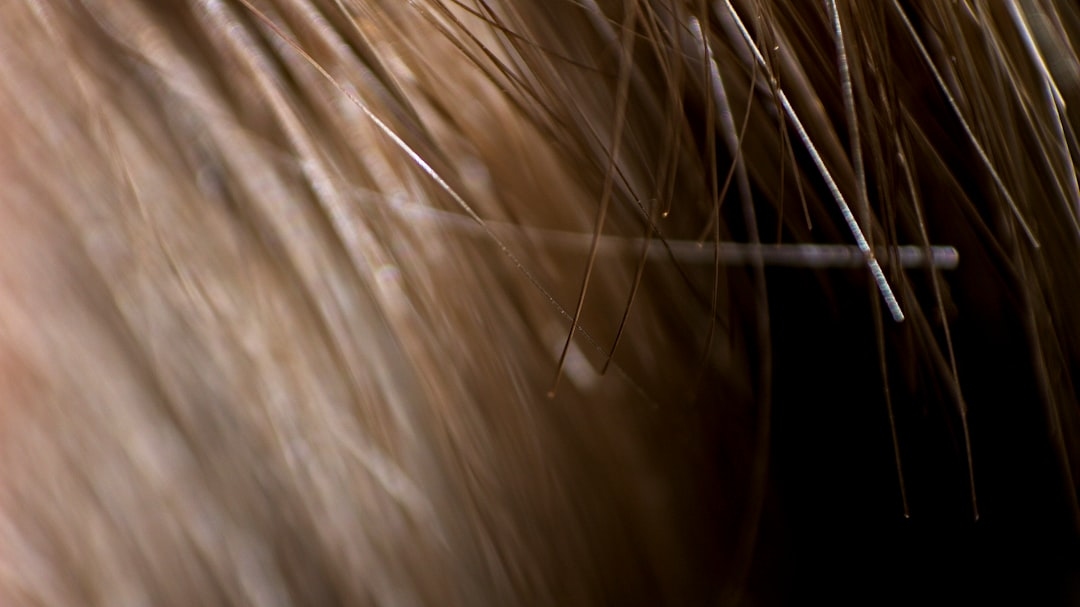
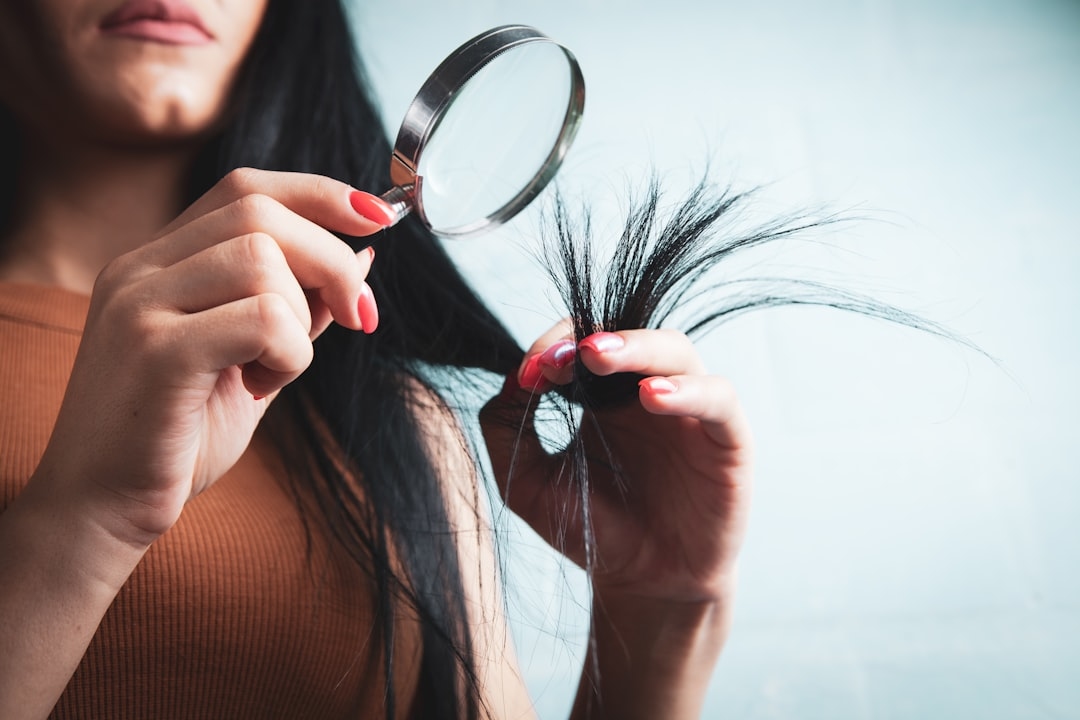
Under a microscope (or phone magnifier app), broken hair shows severe damage: splintered cuticle layers, raised edges, and sometimes hollow sections where the cortex (middle layer) has deteriorated. Healthy hair has smooth, tightly overlapped cuticles with no splintering. This visual evidence confirms whether you have genuine breakage or normal shedding.
Frequently Asked Questions
Is hair breakage permanent?
Yes, once a strand breaks, that damage is permanent. Hair isn’t a living tissue that heals. However, you can prevent further breakage on the same strands and prevent breakage on new growth. The broken sections eventually shed naturally as you approach the normal end of that hair’s growth cycle (4–7 years). This is why cutting broken ends prevents cascading breakage—you stop the damage from progressing upward.
How do you stop hair from breaking?
Address the cause. If breakage is from heat, stop heat styling or use protective sprays. If from dryness, deep condition weekly. If from mechanical stress (tight hairstyles, rough brushing), change your techniques. Most breakage resolves within 4–6 weeks of addressing its cause because new undamaged growth emerges from the scalp.
Is breakage the same as split ends?
No. Split ends are when the cuticle layer splits lengthwise (the hair shaft divides into two or more pieces at the end). Breakage is when the entire strand snaps mid-shaft. Split ends are a stage of breakage—if left untrimmed, split ends progress and cause breakage further up the strand. Trim split ends every 6–8 weeks to prevent progression.
Can you repair broken hair?
No. Products claiming to “repair” broken hair are misleading. They smooth and seal the surface temporarily, making breakage look better, but the structural damage remains. True repair requires cutting off the broken section. Prevention is far more effective than any repair product.
Why does my hair keep breaking even though I take care of it?
You might be doing one thing right but missing another major factor. Common hidden causes: using regular (non-colour-safe) shampoo, blow-drying every day, tight hairstyles, not enough conditioner, or uncontrolled frizz (indicating extremely low moisture). Evaluate all factors. True hair care is holistic.