Contents:
- Why Longevity Matters More Than You Think
- The Common Mistakes That Shorten Extension Life
- Step-by-Step: A Care Routine That Actually Works
- Step 1 — Choose the Right Shampoo and Conditioner
- Step 2 — Establish the Right Wash Frequency
- Step 3 — The Post-Wash Detangling Routine
- Step 4 — Overnight Protection
- Step 5 — Heat Styling Best Practices
- Step 6 — Protect Extensions During Physical Activity
- Maintenance vs Reinstallation: Understanding the Difference
- A Real-Life Example: From Six Weeks to Six Months
- Colour and Chemical Treatments: Proceed with Caution
- Troubleshooting Common Problems
- Problem: Extensions Feel Dry and Rough
- Problem: Bonds Are Sliding Down
- Problem: Extensions Look Frizzy or Puffy
- Problem: Visible Attachment Points
- When Professional Removal Is the Right Choice
- Thinking Long-Term About Your Hair
- Seasonal Considerations: Adapting Your Routine Throughout the Year
- The Role of Diet and Scalp Health in Extension Longevity
- When to Take a Break from Extensions
There is a persistent myth that hair extensions are a short-term luxury — something you wear for a special occasion and then discard when they inevitably lose their lustre. Many people believe that extensions will slip, tangle, and deteriorate within a matter of weeks, making them an expensive indulgence with little practical staying power. That belief is almost entirely wrong, and this guide is here to set the record straight. With the right care routine, professionally fitted extensions can last anywhere from three to twelve months — sometimes longer — depending on the attachment method, the quality of the hair used, and the consistency of aftercare.
The difference between extensions that thrive and extensions that fail comes down to a handful of daily and weekly habits. Once established, these habits take only minutes to carry out and repay that small effort with months of beautiful, salon-quality results. This guide covers every stage of the process — from choosing the right products to understanding when to book professional help — so you can protect your investment and genuinely enjoy the results for as long as possible.
Why Longevity Matters More Than You Think
Hair extensions represent a significant financial commitment. A quality set of blonde hair extensions london from a reputable salon can cost anywhere from £400 to over £1,200, depending on the attachment method, the volume of hair, and the level of customisation involved. When you invest that kind of money, you want a meaningful return — months of beautiful, natural-looking results rather than weeks of gradual decline into tangling and dullness.
Beyond the financial argument, there is a compelling environmental case for making extensions last as long as possible. Disposable clip-in extensions, often purchased cheaply from online retailers, are used a handful of times before being discarded. They are typically made from synthetic fibres that do not biodegrade, contributing to the already serious problem of textile waste in the UK. In 2026, as consumers grow increasingly aware of the environmental footprint of their beauty choices, this matters more than it ever has.
Reusable, professionally fitted extensions — particularly those made from ethically sourced Remy human hair — represent a genuinely more sustainable approach to hair transformation. When cared for correctly, a single set of bonds or tape-in extensions can serve you well for the better part of a year, dramatically reducing the volume of hair-related waste you generate over time. Some specialist salon clients have successfully had the same Remy hair reapplied across two or three successive maintenance cycles, making the environmental cost per month of use remarkably low.
At Ivana Farisei, sustainability is taken seriously at every stage, from sourcing to aftercare guidance. The salon uses Remy human hair that can be repositioned and reapplied multiple times before it reaches the natural end of its lifespan. That means the extensions are not just good for your appearance — they represent a more considered, lower-waste approach to hair transformation that aligns with how many clients now choose to live.
The Common Mistakes That Shorten Extension Life
Before moving on to the step-by-step care routine, it is worth understanding what typically goes wrong. Many salons see clients return far too soon for replacement appointments, not because the extension hair has naturally run its course, but because easily avoidable errors have caused premature deterioration. Recognising these mistakes in advance is half the battle.
- Washing too frequently: Daily washing strips extensions of moisture and weakens bonds or tape adhesive faster than almost anything else. Extensions do not produce sebum the way your natural scalp hair does, so they simply do not need the same wash frequency. Overwashing is one of the leading causes of premature extension failure, particularly in the UK where daily hair washing remains culturally common.
- Using the wrong products: Shampoos containing sulphates, parabens, or high concentrations of alcohol are aggressively drying on extension hair. Over time, these ingredients strip the cuticle layer, leading to rough texture, tangling, and matting that is difficult or impossible to reverse.
- Sleeping with wet hair: Going to bed with damp extensions is one of the fastest routes to irreversible tangling. Wet hair is structurally fragile, and eight hours of movement against a pillow creates friction and knots that can be impossible to brush out without causing serious damage to the extensions and the natural hair underneath.
- Rough brushing from the roots: Dragging a brush from root to tip applies enormous mechanical stress on the bonds or tape wefts, eventually pulling them loose. The correct technique always begins at the ends and works gradually upward.
- Excessive heat without protection: Extensions — particularly those that have been in place for several weeks — lack the natural protective oils present in freshly conditioned hair. Unprotected heat styling accelerates dryness, splits ends, and erodes the structural integrity of the hair shaft over time.
- Neglecting the scalp: Healthy extensions require a healthy scalp. Allowing product build-up or excess oil to accumulate near the attachment points creates an environment that weakens bonds and can contribute to thinning of the natural hair, undermining the entire purpose of wearing extensions.
Step-by-Step: A Care Routine That Actually Works
Step 1 — Choose the Right Shampoo and Conditioner
Begin with a sulphate-free, alcohol-free shampoo specifically formulated for extensions or colour-treated hair. Apply the shampoo by gently working it down the lengths in a straight, downward motion — never scrubbing in circles, which creates friction and causes tangling. Rinse thoroughly with lukewarm water.
Apply a lightweight conditioner from mid-lengths to ends, keeping it well clear — at least two to three centimetres — of any bond or tape attachment points. Conditioner near the roots softens adhesive and is a leading cause of bond slippage. Leave the conditioner on for two to three minutes, then rinse with cool water to seal the hair cuticle and add shine.
Step 2 — Establish the Right Wash Frequency
For most extension wearers, washing two to three times per week strikes the optimal balance between cleanliness and extension preservation. Those with particularly oily scalps might comfortably wash three times; those with drier hair can often manage twice a week without any noticeable build-up. Dry shampoo, applied lightly at the roots and kept away from bond attachment points, helps manage oiliness between washes without any of the stripping effects of a full wash.
Step 3 — The Post-Wash Detangling Routine
After washing, gently squeeze — never wring or twist — excess water from the hair using a soft microfibre towel. Standard terry cloth is too rough for extension hair and creates frizz and cuticle damage over time. Begin detangling from the ends, working gradually upward with a wide-tooth comb or a specialist extension brush with flexible, looped bristles. Always hold the hair above the section you are brushing to minimise tension on the bond attachment points.
Apply a lightweight leave-in conditioner or extension-safe serum before blow-drying. Use a low or medium heat setting and avoid concentrating heat in one spot. Dry the attachment area first and ensure it is fully dry — dampness near the bonds over extended periods weakens adhesion. Once the root area is dry, you can allow the lengths to air-dry for a more natural finish.
Step 4 — Overnight Protection
The overnight period is when extensions face their most sustained risk. Hours of movement against a pillow create friction and tangling that compounds night after night into cumulative damage. Before bed, loosely braid the hair into one or two plaits, or gather it into a soft, low ponytail secured with a fabric hair tie. Avoid elastic bands, which catch and break both extension and natural hair.
Upgrading to a silk or satin pillowcase provides an additional layer of protection by significantly reducing friction. The smoother surface allows hair to move freely rather than catching and pulling. This is a modest investment — typically between £20 and £50 for a quality option — that delivers disproportionate benefit over weeks and months of accumulated wear.
Step 5 — Heat Styling Best Practices
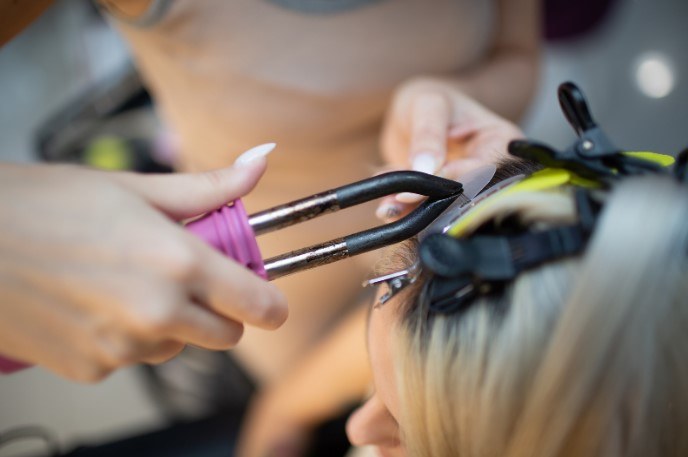
Always apply a heat protectant spray before using any heated styling tool. Set straighteners and curling wands to no higher than 180°C — exceeding this offers no styling benefit and causes measurable damage to the hair structure. When using a curling wand, keep it moving rather than clamping it in one fixed position.
One technique the stylists at Ivana Farisei recommend is to style the extension hair and the natural hair in slightly separate passes, then blend the two together at the final step. This allows you to use a slightly lower temperature on the extensions while still achieving a seamless, polished finish, and it reduces total heat exposure time in a way that accumulates meaningfully over weeks of regular styling.
Step 6 — Protect Extensions During Physical Activity
Swimming poses one of the most serious threats to extension longevity. Chlorinated pool water and salt water both strip moisture and can dissolve the adhesive in tape extensions or weaken keratin bonds. Before swimming, coat the hair thoroughly with a rich leave-in conditioner, braid it tightly, and wear a well-fitting swimming cap. After swimming, rinse immediately with fresh water and follow the full post-wash routine.
During gym sessions and other exercise, tie hair back loosely rather than pulling it into a tight, high ponytail, which places repeated mechanical stress on the bond attachment points. A loose, low bun secured with a soft scrunchie is ideal for most activities.
Maintenance vs Reinstallation: Understanding the Difference
One of the most commonly confused concepts in the world of hair extensions is the distinction between maintenance appointments and full reinstallation. Many wearers conflate the two, either skipping necessary maintenance out of concern about the cost, or booking unnecessary full replacement appointments when a simple upkeep visit would have been sufficient and far less expensive.
Maintenance refers to the periodic salon visits — typically recommended every six to ten weeks — where a trained stylist repositions bonds that have grown out with the natural hair growth cycle, replaces any bonds that have slipped, reapplies tape wefts that have reached the limit of their adhesion period, and treats the extensions with a professional deep conditioning treatment. These appointments preserve the current set of extension hair and extend its working life significantly, at a fraction of the cost of starting afresh.
Reinstallation, by contrast, involves removing the existing extensions entirely and fitting a completely new set. This is necessary when the extension hair itself has genuinely reached the end of its lifespan — too dry or too tangled to restore to a usable standard — or when the client wants a significantly different style, length, or colour. Full reinstallation is more time-consuming, more resource-intensive, and considerably more expensive than a maintenance visit.
The practical conclusion is clear: regular maintenance appointments save money over the lifetime of a set of extensions. Clients who skip maintenance often find they need full reinstallation several weeks earlier than those who keep their scheduled upkeep visits. Ivana Farisei stylists are explicit about this distinction from the very first consultation, providing a realistic, individualised timeline for both maintenance and eventual reinstallation so clients can plan ahead without any surprises.
A Real-Life Example: From Six Weeks to Six Months
Consider the experience of a client — we will call her Sarah — who first came to Ivana Farisei having had extensions fitted elsewhere that lasted barely six weeks before becoming unwearable. She had been washing them daily, going to bed with still-damp hair, and using a sulphate-heavy shampoo she had been loyal to for years. She had never once received aftercare guidance from the salon that fitted them.
After her first appointment at Ivana Farisei, Sarah received a thorough, personalised aftercare consultation alongside her new set of extensions. She switched to a sulphate-free shampoo recommended by her stylist, began braiding her hair before bed each night, and booked a maintenance appointment at the eight-week mark to have her bonds repositioned. By the time she needed her first full reinstallation, her extensions had lasted just over six months — a dramatic improvement on her previous experience. The quality of the Remy hair used by Ivana Farisei played a meaningful role, but the changed aftercare habits made the single biggest practical difference.
Her experience is far from unusual. The team at Ivana Farisei hear versions of this story regularly — clients who assumed extensions were inherently short-lived, only to discover that a consistent routine transforms what they had thought was a temporary indulgence into a genuinely durable, long-term styling solution.
Colour and Chemical Treatments: Proceed with Caution
Extensions made from human Remy hair can technically be toned or coloured, but this requires careful professional management. Because the hair has already been processed, it is more porous and more vulnerable to chemical damage than virgin, unprocessed hair. Attempting to significantly lighten extensions at home is particularly risky — the results are often uneven, and severe dryness or outright breakage can follow.
Clients seeking a different shade are nearly always better served by selecting the most suitable colour at the point of fitting. Ivana Farisei offers an extensive palette, including the increasingly popular ombre hair extensions uk finish, which blends two or more complementary shades seamlessly and eliminates the need for post-application colouring entirely. An ombre or balayage-toned set also grows out far more gracefully than a single solid colour, reducing the visual contrast as the natural hair grows and keeping the overall look polished and intentional for longer between maintenance visits.
Troubleshooting Common Problems
Problem: Extensions Feel Dry and Rough
Dryness is the most common complaint among extension wearers and is almost always a moisture deficit issue. Introduce a weekly deep conditioning mask — applied from mid-lengths to ends only, avoiding the bond area — and leave it on for a minimum of twenty minutes. An argan oil serum or lightweight hair oil applied to dry hair between washes can help restore softness and reduce static. Audit your shampoo and switch to a moisture-focused, sulphate-free formula if you have not already done so.
Problem: Bonds Are Sliding Down
Slippage typically occurs when conditioning products have been applied too close to the bond attachment points, softening the keratin or weakening the adhesive over time. Review your product routine and ensure all conditioning treatments are applied from mid-length downward only. Book a maintenance appointment promptly, as loose bonds left unaddressed can tangle around the natural hair and create additional problems.
Problem: Extensions Look Frizzy or Puffy
Frizz is usually caused by dryness, humidity, or rough handling while wet. Finish every blow-dry session with a cool shot to seal the cuticle. Apply a small amount of smoothing serum or light oil to dry hair before going out. On humid days — common across UK cities in summer — an anti-humidity finishing spray applied before leaving the house helps the style hold throughout the day.
Problem: Visible Attachment Points
Visible bonds or tape wefts are most often the result of natural hair growth pushing the attachment points further down the shaft — a completely expected progression after six to eight weeks of wear. This is the moment to book a maintenance appointment. A stylist will move the bonds back up to an appropriate position, restoring both the appearance and the integrity of the set.
When Professional Removal Is the Right Choice
Not all extension problems can or should be addressed at home. Severely matted extensions should never be forced apart with a brush — the mechanical force required will pull bonds away from the scalp and break the natural hair underneath. A professional detangling treatment at the salon can often restore extensions that appear beyond saving, using specialist products and skilled technique that cannot be replicated at home.
Dedicated hair extension removal must always be carried out by a trained professional. The solvents and tools used to dissolve keratin bonds or release tape adhesive must be applied correctly to avoid damaging the natural hair. Attempting to pull or cut extensions free at home almost always results in breakage that is costly and time-consuming to repair. Ivana Farisei offers a dedicated removal service that prioritises the health and condition of your natural hair throughout, leaving it in the best possible state for whatever comes next — whether a fresh set of extensions or a period of natural growth and recovery.
Thinking Long-Term About Your Hair
The clients who get the most from their extensions — financially, aesthetically, and practically — are those who approach them with a long-term mindset. They see the initial cost not as a one-off expenditure but as the beginning of an ongoing relationship with their hair that rewards consistent care and attention.
Ivana Farisei actively encourages this perspective from the very first consultation. Every client receives clear, personalised guidance on aftercare, a realistic maintenance timeline tailored to their hair type and lifestyle, and honest advice about which extension method is most likely to serve them for the longest period. That transparency and individualised approach is one of the key reasons clients return — and why so many find that their second and third sets of extensions last noticeably longer than their first, because they have learned what their specific hair and routine genuinely require.
Hair extensions, cared for with the right products, the right habits, and the right professional support, are a durable solution capable of transforming your hair for months at a time — and doing so in a way that is kinder to both your wallet and the environment than many people initially assume.
Seasonal Considerations: Adapting Your Routine Throughout the Year
One factor that extension aftercare guides frequently overlook is the seasonal variation in how hair behaves and what it needs. Extensions are not a static addition to the hair — they respond to environmental changes just as natural hair does, and a care routine that works perfectly in winter may need adjustment for summer and vice versa.
During the winter months in the UK, central heating creates indoor environments with very low humidity. This is drying for both natural hair and extension hair, and clients often notice that extensions become rougher in texture and more prone to static during the colder months. Adding a humidifier to the bedroom helps, as does increasing the frequency of deep conditioning mask treatments to weekly during this period. An additional serum or hair oil applied in the mornings can also help combat the dryness that accumulates over the weeks of a cold winter.
Summer presents a different set of challenges. Higher humidity outdoors encourages frizz, and increased outdoor activity means more exposure to chlorine, salt water, and UV radiation — all of which affect extension hair. A UV-protective hair spray applied before spending extended time in the sun can help prevent colour fading and surface damage. Experienced stylists regularly advise clients to adjust their seasonal routine and can provide tailored guidance at maintenance appointments.
The Role of Diet and Scalp Health in Extension Longevity
It may seem surprising to include diet in a guide about hair extension care, but the health of the natural hair and scalp that the extensions are attached to directly affects how well extensions sit, how long they last, and how natural they look. Extensions attached to healthy, well-nourished natural hair simply perform better than extensions attached to dry, brittle, or thinning natural hair.
Adequate protein intake is particularly relevant, since hair is primarily composed of the protein keratin. Clients who eat a balanced diet with sufficient protein tend to have stronger, more resilient natural hair that holds extension bonds more securely and with less risk of breakage at the attachment point. Biotin (vitamin B7), zinc, and iron are also frequently cited as important micronutrients for hair health, and deficiencies in these — which are not uncommon, particularly among young women in the UK — can contribute to increased shedding and hair fragility.
Scalp health matters for the same reasons. A healthy, well-balanced scalp provides a stable, supportive base for extension attachment. Regular, gentle scalp massage during washing — avoiding the bond attachment points but working the scalp itself — improves circulation and encourages a healthy hair growth environment. The best extension specialists include scalp health assessment as part of their consultation process, identifying any issues that might affect the extension fitting before the appointment proceeds.
When to Take a Break from Extensions
Most extension wearers who follow proper aftercare and attend maintenance appointments can wear extensions continuously with no negative consequences for the health of their natural hair. However, there are specific circumstances in which taking a planned break from extensions is the sensible course of action.

Post-partum hair loss — a common and temporary shedding that affects many women in the months following childbirth — creates a period during which the natural hair is more fragile than usual and less capable of supporting extension attachment without risk. Extensions during this phase are not necessarily off the table, but require a particularly light-touch approach and careful monitoring. A consultation with a specialist extensionist, combined with advice from a trichologist if the shedding is significant, will clarify whether extensions are appropriate during this window and which method would be safest.
Similarly, clients undergoing certain medical treatments — including some medications that affect the hair growth cycle — may be advised to take a break until their hair has returned to its normal growth pattern and strength. This is not a permanent circumstance for most clients, and a thoughtful return to extensions after a period of recovery can be planned well in advance with a specialist stylist to ensure the natural hair is in the best possible condition when the time comes.