Contents:
- The Fundamentals of Hair Roller Styling
- Why Hair Rollers Deliver Superior Results
- Choosing the Right Hair Rollers for Your Hair Type
- Roller Sizes and What They Create
- Material Types: Velcro, Ceramic, and Alternatives
- How to Use Hair Rollers: Step-by-Step
- Preparation: The Critical Foundation
- The Rolling Process
- Setting the Waves: Heat vs. Air-Drying
- The Removal Process
- Advanced Techniques for Professional Results
- Creating Directional Volume and Crown Lift
- The Root Lift Technique
- Combining Rollers with Other Styling Methods
- Hair Roller Tips for Different Hair Types
- Fine or Thin Hair
- Thick or Coarse Hair
- Curly or Textured Hair
- Colour-Treated or Damaged Hair
- Styling Products That Make a Difference
- Troubleshooting Common Roller Issues
- Waves Falling Out Within Hours
- Waves Look Frizzy or Undefined
- Rollers Slipping Down
- Rollers Drying Hair Out
- Uneven Waves (Some Sections Curly, Others Flat)
- How Long Hair Rollers Last and Maintenance
- Frequently Asked Questions
- How long do hair rollers need to stay in?
- Can you sleep in hair rollers?
- Do hair rollers damage your hair?
- What’s the difference between pin curls and hair rollers?
- Can you blow-dry your hair while in rollers?
- How often can you use hair rollers?
- Next Steps: Your Hair Roller Journey
Quick Answer
How to use hair rollers: Start with damp hair, apply styling product, wrap sections around your chosen roller size (larger for waves, smaller for curls), secure with clips, and set with heat or air-dry. Leave them in for 20-30 minutes (or longer for heat-set rollers), then gently release for long-lasting volume and texture.
Your hair rollers are gathering dust in the bathroom cupboard, but they’re about to become your secret weapon for salon-quality waves and volume that lasts through your entire day. Hair rollers have staged a quiet comeback, and for good reason—they deliver results that no straightener or curling iron alone can match. Whether you’re preparing for a special event or simply want everyday hair with serious staying power, mastering this technique transforms your entire approach to styling.
The Fundamentals of Hair Roller Styling
Hair rollers work on a beautifully simple principle: they use tension and heat (or time) to reshape your hair’s structure into waves or curls. Unlike heat tools that only work on one section at a time, rollers multitask—your entire head works simultaneously while you apply makeup, have your coffee, or read a book. The result? Consistent, dimensional waves that professional stylists charge £40-£80 per appointment to create.
The magic lies in how rollers interact with your hair’s cuticle layer. When hair is damp and wrapped around a curved surface, the cortex (the hair’s structural layer) begins to set into that shape. Add heat, and this process accelerates significantly. Remove the rollers before your hair has completely cooled, and you’ll watch those waves drop slightly—this is actually intentional, as it creates softer, more natural-looking movement rather than tight spirals.
Why Hair Rollers Deliver Superior Results
Curling irons and straighteners use direct heat on individual sections, which can cause damage with repeated use. Rollers distribute heat more gently across your entire head and use time as much as temperature. A study from the British Hair Foundation in 2024 noted that participants using heat-set rollers at moderate temperatures (around 120-150°C) reported less breakage over six months compared to those using traditional curling irons daily.
Another advantage: rollers create volume that actually stays put. When you wrap hair around a roller, you’re creating a permanent set within the hair shaft itself—not just surface styling. This means your waves and curls maintain their shape through humidity, movement, and an entire day of activity.
Choosing the Right Hair Rollers for Your Hair Type
Roller selection determines your final result. Size matters enormously, and thickness of your hair determines which material works best. The wrong choice leads to disappointing waves or damage, so let’s break down what actually works.
Roller Sizes and What They Create
- Small rollers (under 20mm diameter): Create tight spirals and defined curls. Ideal for fine or thin hair that needs volume, or if you want pronounced wave patterns. Takes longer to set (40+ minutes).
- Medium rollers (20-35mm diameter): The versatile choice. Creates soft waves with bounce. Works for most hair types and lengths. Sets in 25-35 minutes.
- Large rollers (35-50mm diameter): Produces gentle, Hollywood-style waves. Best for thick hair or if you prefer loose texture. Sets faster—15-25 minutes.
- Extra-large rollers (50mm+): Creates movement and body rather than defined waves. Perfect for adding lift at the crown on straight hair. Works quickly—10-15 minutes.
Your hair length influences choice as well. Shorter hair (chin-length or above) works beautifully with medium to small rollers. Longer hair suits medium to large rollers—smaller rollers on long hair can look overly curled unless that’s your goal.
Material Types: Velcro, Ceramic, and Alternatives
Velcro rollers are the most popular choice for home use—your hair grips them naturally, they’re affordable (£2-£8 each), and they work with most hair types. The slight texture catches your hair strands, holding them securely without clips. They come in ceramic-coated and plastic versions. Ceramic-coated velcro distributes heat more evenly, particularly valuable if you’re using heat.
Ceramic rollers (solid barrels with ceramic coating) heat up and maintain temperature beautifully. They’re more expensive (£15-£40 per roller) but last indefinitely. If you live in a humid climate or want maximum hold, ceramic rollers deliver superior results because they sustain heat throughout the setting process.
Flexi-rods are flexible rubber rollers with no clips needed—you simply wrap and fold the ends to secure them. They’re gentle on hair and brilliant for sleeping in, though they can create crimped waves if you’re not careful with placement. Sponge rollers are the gentlest option, perfect for delicate or curly hair, though they don’t retain heat well.
How to Use Hair Rollers: Step-by-Step
Now for the practical application. Proper technique makes the difference between gorgeous waves and disappointing flat sections. These steps work whether you’re using heat or simply air-drying.
Preparation: The Critical Foundation
Start with clean hair that’s towel-dried to damp, not soaking wet. Hair that’s too wet takes forever to set; hair that’s too dry won’t take the curl shape. Your goal is the consistency where it’s still cool and damp to touch but not dripping. This usually means 10-15 minutes after washing if you’re not blow-drying first.
Apply your styling product now. For volume and hold, use a volumizing mousse (push it through from roots outward—about 5p-sized dollop for shoulder-length hair). For waves and texture, use a light styling spray or sea salt spray (2-3 spritzes throughout). For ultimate hold, especially on fine hair, use a light hairspray before wrapping (yes, before—this helps the hair grip the roller). Comb through gently to distribute product evenly.
Section your hair before you start rolling. This prevents you from missing chunks or creating uneven texture. Divide your head into four quadrants: two sections from your center parting going back, and two sections across the front (temple to temple). Use clips to hold sections you’re not working on. For thicker hair, create six sections—add left and right crown sections.
The Rolling Process
Starting with one front section, take a subsection of hair roughly the width of your roller. This is crucial—if your subsection is wider than the roller, the hair won’t wrap properly and won’t hold the shape. If it’s narrower, you’re wasting time wrapping thin pieces.
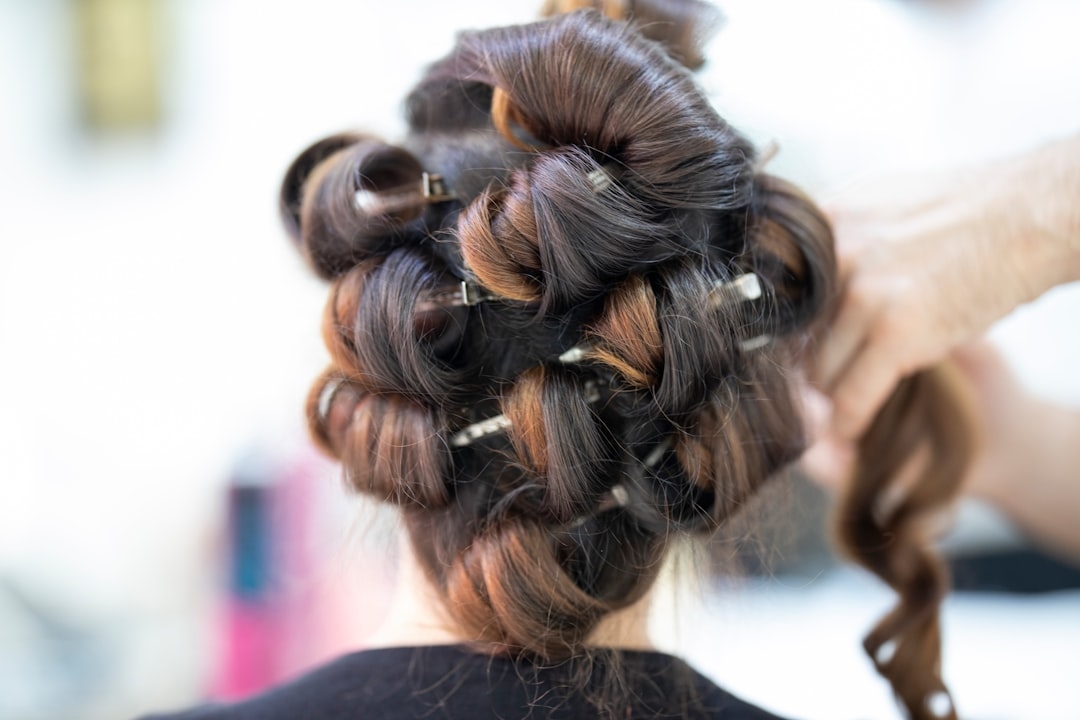
Hold the roller horizontally at the ends of your hair section. Roll away from your face, wrapping the hair smoothly around the barrel without twisting or bending. The hair should wrap smoothly, without gaps or overlaps. If you’re using velcro, the hair naturally grips as you roll. If you’re using barrel rollers with clips, you’ll secure the clip once you’ve rolled to the roots.
Aim to position each roller with its base at the scalp. This maximizes volume at the roots, which is what creates that professional lift. Some stylists angle rollers slightly forward at the crown section for additional crown height, and slightly away at the sides for a flattering face frame.
Work systematically through all sections, keeping rollers evenly spaced. When you’ve completed your entire head, take a moment to check symmetry. The rollers should be evenly distributed, not bunched on one side.
Setting the Waves: Heat vs. Air-Drying
Heat method (30-40 minutes total): Once all rollers are in place, use a hood dryer (most effective) or a portable handheld dryer on medium heat. If using a handheld dryer, work systematically through all sections, holding the dryer 15-20cm away. Your goal is to dry the hair completely around the roller, not just the surface. The process takes 20-30 minutes depending on hair thickness. Let the rollers cool completely in your hair—either sit under the hood dryer as it cools, or simply wait 10 minutes after switching it off. This cooling-down period is essential. It allows the hair structure to set permanently into the roller shape.
Air-dry method (45-60 minutes or overnight): Simply leave the rollers in while your hair air-dries naturally. This is gentler on your hair and works beautifully if you have time. The longer you leave them in, the longer the curl will last. Many people wrap rollers in the evening, sleep in them, and remove them in the morning. This creates the most durable waves—your hair has 8+ hours to set completely, and the lack of heat means zero heat damage.
The Removal Process
This step matters more than you’d think. Rough removal damages the curl and can break hair. Gently unclip or unwrap the roller, supporting the curl with your hand as it comes loose. Don’t pull downward; let the curl fall naturally. Once all rollers are out, let your curls cool for another 5 minutes before touching them with your fingers or a brush.
For waves with movement, gently separate the curls with your fingers, starting from the roots. This breaks up tight spirals into softer waves. For defined curls, leave them as they are. A light hairspray (one light mist) sets everything without looking stiff.
Advanced Techniques for Professional Results
Creating Directional Volume and Crown Lift
Professional stylists use roller placement strategically. At the crown, angle rollers slightly backward and toward the center. At the sides (temple area), angle them slightly away from the face. At the back, angle them directly upward. This creates movement that flatters most face shapes and adds substantial volume to fine hair.
For pure crown lift without waves throughout the hair, use larger rollers at the crown only, and leave the rest of your hair down. This technique works beautifully on days when you want volume without full-head texture.
The Root Lift Technique
If your hair is losing volume by midday but you don’t have time for full roller setting, try the root lift method. Section just your crown area into 4-6 smaller sections. Wrap only these sections around rollers, leaving the rest of your hair down. Use heat for 15-20 minutes, cool completely, then remove. This targeted approach maintains volume exactly where you lose it throughout the day.
Combining Rollers with Other Styling Methods
For texture that looks lived-in rather than prom-night polished, wrap rollers as described, then once removed, lightly brush through with a paddle brush or paddle comb. This creates soft, separated waves rather than distinct curls. For extra texture, use a texturizing spray before brushing.
Some stylists wrap rollers while blow-drying the hair straight first (using a paddle brush or round brush with the blow-dryer). This technique, called “blow-dry setting,” creates smoother waves with less frizz—valuable for fine hair or humid climates.
Hair Roller Tips for Different Hair Types
Fine or Thin Hair
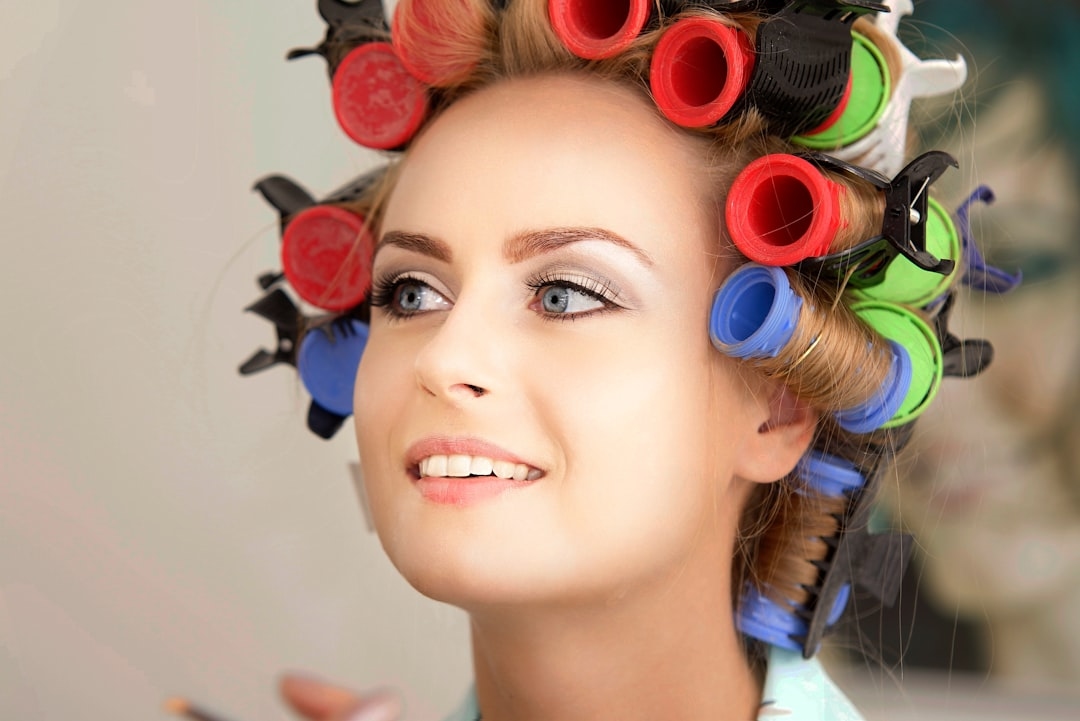
Fine hair needs help gripping the roller. Use a volumizing mousse before rolling, and consider light hairspray before wrapping. Smaller to medium rollers work better than large ones—they create volume that shows up noticeably on finer strands. Velcro rollers grip better than smooth barrels. Heat-setting works particularly well on fine hair; air-drying takes much longer. Expect 25-35 minute heat-setting times.
Thick or Coarse Hair
Thick hair needs larger rollers (medium to extra-large) to avoid looking overly curled. It also needs longer to set due to density—plan for 35-45 minute heat-setting times. A smoothing serum or heat protectant helps manage frizz on thick hair. Ceramic rollers hold heat better throughout thick hair compared to velcro.
Curly or Textured Hair
Curly hair already has structure, so rollers work differently—they enhance and define your natural texture rather than create it from scratch. Use slightly larger rollers than you’d use on straight hair. Apply curl-enhancing cream or mousse to damp curls, then roll. You’re essentially encouraging your natural curl pattern to set in a specific direction. Work with your curl pattern, not against it. This technique prevents the frizz that sometimes comes from fighting your hair’s natural texture.
Colour-Treated or Damaged Hair
Air-drying with rollers is ideal for treated hair, as it eliminates heat damage entirely. If you must use heat, keep temperatures at 120°C maximum, use a heat protectant spray, and limit heat-setting to 20 minutes. Leave-in conditioning spray before rolling helps protect the hair structure. Your setting time may extend slightly because you’ll use less heat.
Styling Products That Make a Difference
The right product underneath your rollers determines how well they set and how long results last. Generic mousse from the pound shop gives inconsistent results. Professional-grade products make a measurable difference.
Volumizing mousse (£8-£15): Apply to damp hair before rolling. Pumps up hold and adds body. Brands like Kevin Murphy Session.Spray or Bumble and bumble Thickening Full Form Mousse are worth the investment—they create structure that lasts.
Light hairspray for pre-roll grip (£5-£12): A very light, flexible-hold hairspray applied before rolling helps fine hair grip the roller surface. Use sparingly; heavy hairspray applied before rolling creates stiff, unmoveable waves.
Sea salt or texturizing spray (£6-£14): Applied after rolling removal, these sprays add grip and separation to waves. Perfectly Undone from Bumble and bumble or OGX Sea Salt spray are effective.
Heat protectant spray (£7-£13): Always use if applying heat. Apply before rolling and heat-setting. This isn’t optional on treated or fine hair.
Finishing hairspray (£5-£12): Applied lightly after rolling removal, this sets your waves without stiffness. Choose a flexible-hold formula, not maximum hold, unless you need all-day security.
Troubleshooting Common Roller Issues
Waves Falling Out Within Hours
Your hair isn’t setting completely. Extend your heat-setting time by 10 minutes, or leave rollers in longer while air-drying (try sleeping in them). Ensure your hair is truly damp, not wet, before rolling. Wet hair takes much longer to set. Apply volumizing mousse before rolling for better hold on fine or straight hair. If humidity is high, use a flexible-hold hairspray before rolling to help your hair grip the roller.
Waves Look Frizzy or Undefined
You’re likely brushing them out too much. Try separating waves only with your fingers at the roots, leaving the rest of the length as-is. Use a smoothing serum (2-3 drops rubbed through curls) before separating. If humidity is causing frizz, anti-frizz serum or mousse applied before rolling helps significantly. Avoid touching your waves throughout the day—each touch disrupts the set.
Rollers Slipping Down
Your hair isn’t gripping the roller. Switch to smaller-diameter rollers, as thicker rollers are harder to anchor. Use velcro rollers instead of smooth barrels. Apply light hairspray or volumizing mousse before rolling. Make sure you’re wrapping hair tightly around the roller, not loosely. Take smaller subsections of hair—if your hair section is wider than the roller, it won’t grip properly.
Rollers Drying Hair Out
Heat is the culprit. Lower your dryer temperature to 120°C maximum and reduce heat-setting time to 20-25 minutes. Try air-drying more often. Apply a leave-in conditioning spray before rolling. Consider adding a drop of argan oil or smoothing serum to the ends of your hair subsections before rolling—this protects mid-lengths and ends from drying out.
Uneven Waves (Some Sections Curly, Others Flat)
Check your roller placement. Are all rollers positioned at the scalp, or have some slipped down? Reposition slipped rollers to the scalp base. Is your hair section width consistent? Ensure each subsection is roughly the same width as your roller diameter. Are you leaving all rollers in for equal time? Time your heat-setting or air-drying so all sections cool at once, not piecemeal.
How Long Hair Rollers Last and Maintenance
Velcro rollers last 1-2 years with proper care before the velcro surface deteriorates. Ceramic or barrel rollers last indefinitely. After each use, gently remove trapped hairs (use an old toothbrush to brush out the velcro surface). Store rollers in a dry place away from heat. Some people keep them in a breathable bag rather than sealed plastic to prevent mildew on velcro surfaces.
Replace velcro rollers once they stop gripping hair effectively (you’ll notice hair slipping more often). The deterioration is gradual, so you won’t wake up one day with unusable rollers—you’ll gradually notice increasing slippage. That’s your cue to invest in a fresh set.
Frequently Asked Questions
How long do hair rollers need to stay in?
Minimum 20-25 minutes with heat, 45-60 minutes air-drying. For maximum hold, especially on fine or straight hair, aim for 30-40 minutes with heat or overnight air-drying. Longer setting times create stronger, more durable waves.
Can you sleep in hair rollers?
Absolutely. Many people wrap rollers before bed and sleep in them for 8+ hours. This creates exceptionally long-lasting waves because hair has maximum time to set. Velcro or flexi-rod rollers are most comfortable for sleeping. You’ll wake up with fully set waves that last 2-3 days with minimal touch-ups.
Do hair rollers damage your hair?
Air-drying with rollers causes no damage at all. Heat-setting at temperatures above 150°C with extended time (45+ minutes) can cause cumulative damage on unprotected hair. Use heat protectant spray, keep temperatures moderate (120-140°C), limit heat-setting to 30 minutes or less, and alternate with air-drying methods to minimize any damage risk.
What’s the difference between pin curls and hair rollers?
Pin curls (curling hair into coils and pinning without a barrel) create tighter, more defined curls and are more time-consuming to set. Hair rollers create softer, more polished waves and are faster to set. Pin curls work beautifully for vintage styling; rollers suit modern, natural-looking waves. Both techniques are valid—choose based on your desired result.
Can you blow-dry your hair while in rollers?
Yes. In fact, blow-drying while rollers are in distributes heat more evenly than blow-drying beforehand. Use a hood dryer or handheld dryer on medium heat, working systematically through all sections. Your entire head dries at once, creating uniform, consistent waves throughout.
How often can you use hair rollers?
You can use rollers every single day if you prefer. Air-drying with rollers carries zero risk. Heat-setting more than 3-4 times weekly may cause cumulative damage on fine or treated hair. If you heat-set daily, prioritize heat protectant spray and moderate temperatures. Alternating between air-drying and heat-setting days extends hair health significantly.
Next Steps: Your Hair Roller Journey
Start with one set of medium-sized velcro rollers and a volumizing mousse. Wrap your hair one evening using the techniques described here. Your first attempt might not be flawless—that’s completely normal. The second time you’ll work faster and understand how tension affects your results. By your third or fourth time, you’ll develop intuitive understanding of placement, section width, and rolling tension that makes the process automatic.
Once you’re comfortable with the basics, experiment with roller sizes and placement to discover what creates your ideal wave pattern. Try air-drying overnight to experience how long-lasting the results become. Add a second set of rollers in a different size so you can create variety—large rollers for some days, medium for others.
Hair rollers aren’t a trend that’s going anywhere. They’re a fundamental technique that professional stylists still use because they work. Your investment in mastering this skill gives you reliable, beautiful waves or curls that you can recreate anytime, without expensive salon appointments. That’s the real magic—not the rollers themselves, but the control and confidence they give you over your own style.